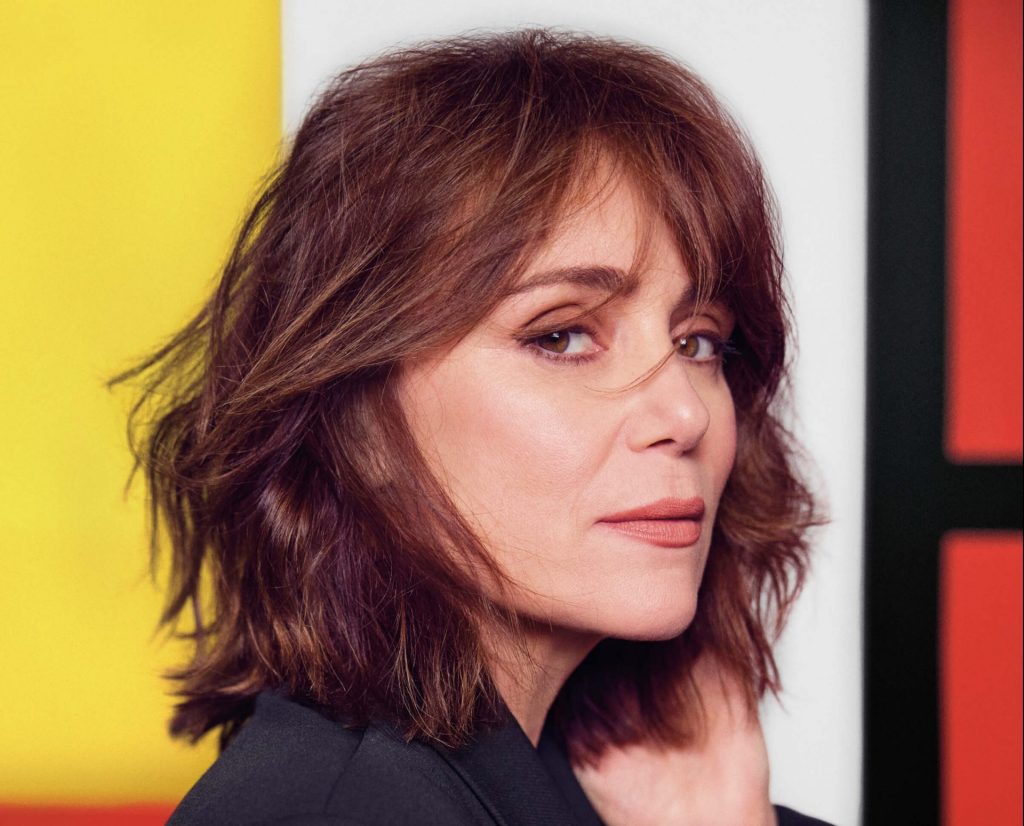
Bodyguard, Line Of Duty, The Durrells and now the highly anticipated Scoop – she’s the muse of modern TV. Stylist’s Lisa Smosarski meets the magnetic Keeley Hawes…
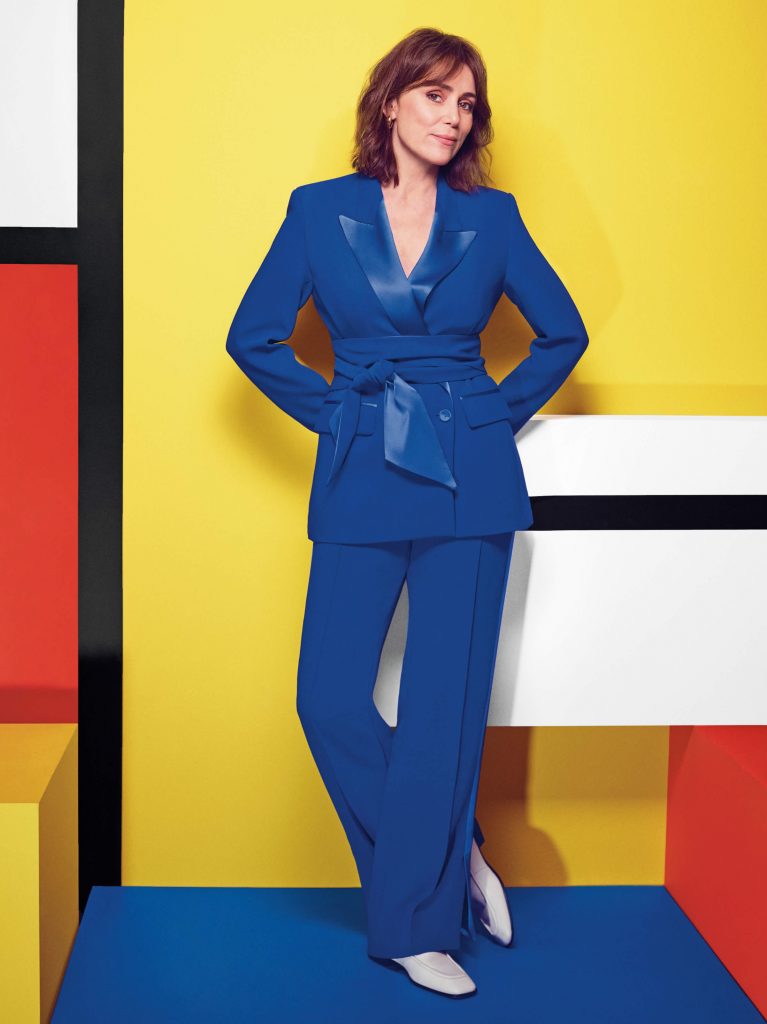
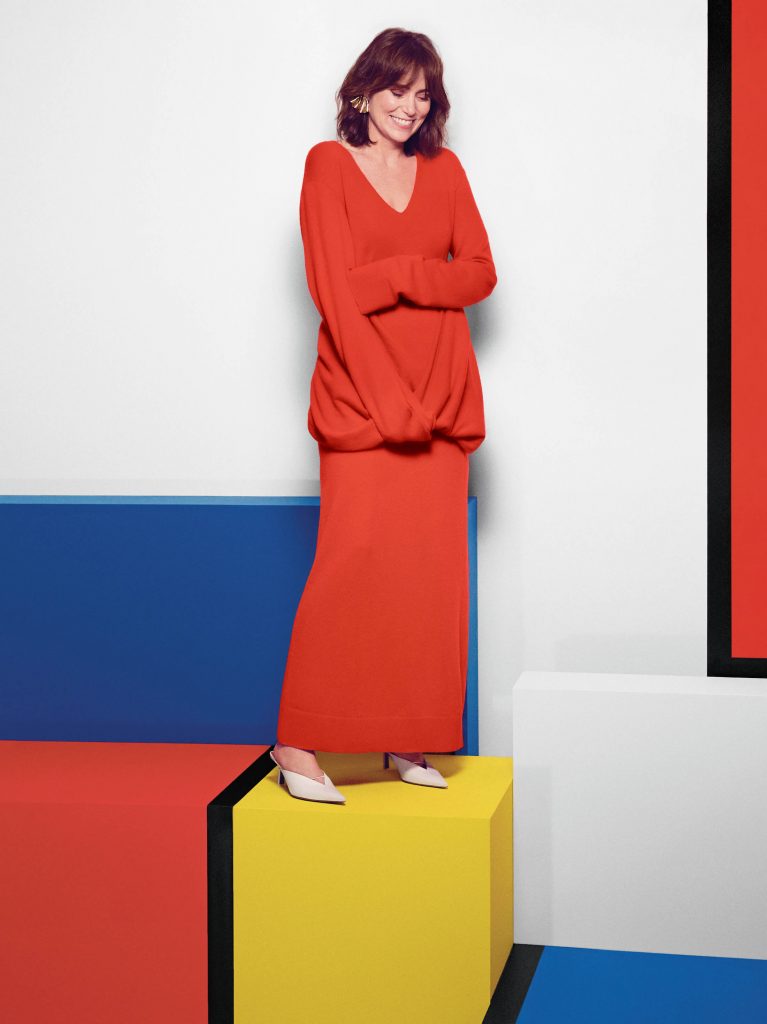
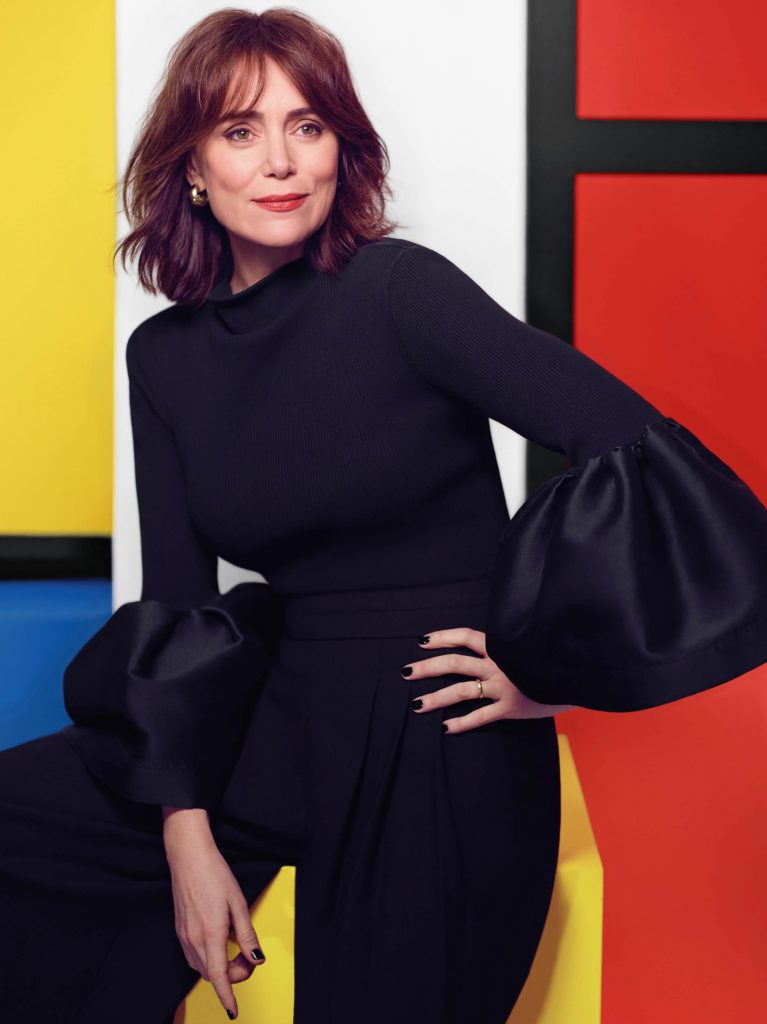
Keeley Hawes is dripping in colour. Primary colours at that. She’s head to toe in the kind of shades that remind you of gloopy pots of paint in a children’s nursery. Bright royal blues, vivacious reds and a yellow that practically yells summer; it’s a far cry from the period costumes and police uniforms that we’ve come to know from one of Britain’s most popular small-screen heroes. “Oh, it’s really not me,” Hawes laughs. “This is about as crazy as I get,” she says, pointing at the grey jumper and quiet-luxe cream corduroy joggers she normally wears. “Primary colours are not for me. I love and appreciate fashion, but I’ve just got a thing for grey jumpers and black coats. It’s good to be pushed out of my comfort zone, though.”
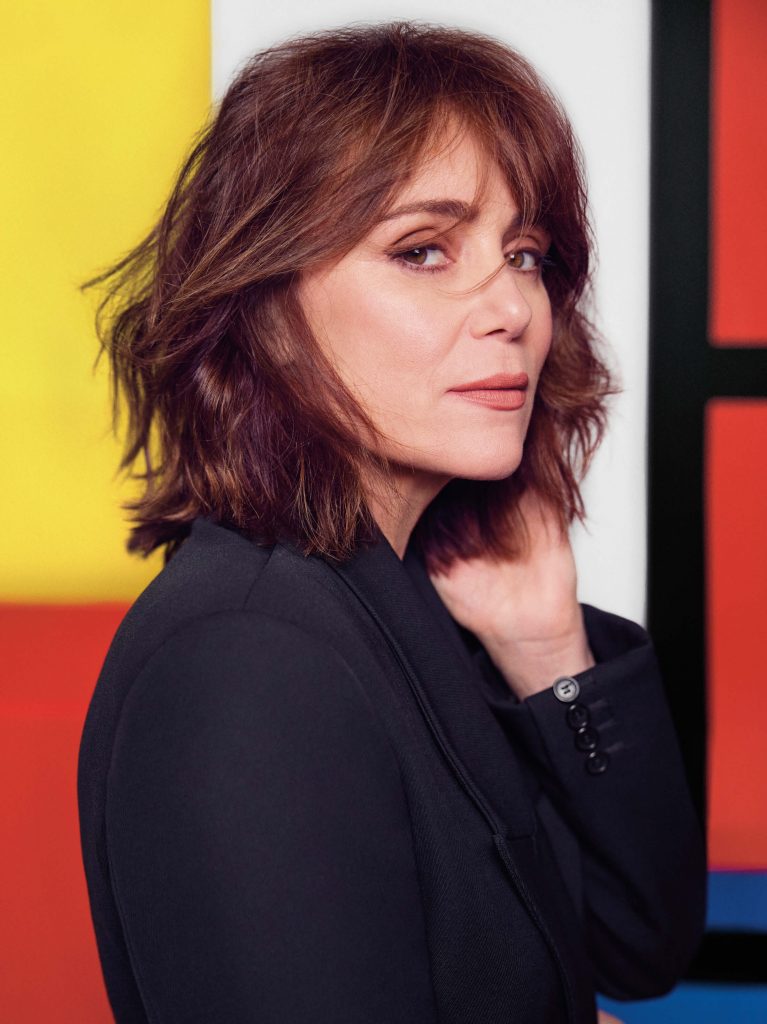
That creative bravery and tolerance of the discomfort zone is something that Hawes has been embracing a lot in recent months – from her eight-week run on stage at the Donmar Warehouse in London for The Human Body, a new play that charts the origins of the NHS via the lens of a midlife romance (“It’s probably been one of the biggest challenges I’ve ever undertaken,” admits Hawes. “It feels huge but I’m winning.”), to tackling big, biopic roles on screen. The most recent of these sees her play Amanda Thirsk, a former royal aide, in Netflix’s Scoop, a fictionalised retelling of the story behind the now famous BBC Newsnight interview with Prince Andrew. The 2019 interview, led by Emily Maitlis and booked by journalist Samantha McAlister, was agreed by Thirsk as a way of setting the record straight about Andrew’s connection to convicted paedophile Jeffrey Epstein. The interview backfired and is largely credited with being the catalyst for Andrew’s withdrawal from public life.
“I’ve played a few real people, living and no longer with us, and there is a responsibility with those roles,” Hawes says. “Nobody wants to do a hatchet job, and having spoken to Sam [McAlister], she was keen that it was a sympathetic version of Amanda, a person she was close to. And I think that’s what’s been achieved.”
As Thirsk, Hawes stars alongside Gillian Anderson (Maitlis), Billie Piper (McAlister) and Romola Garai as Esmé Wren, Newsnight’s editor at the time. It’s a formidable cast of female actors playing a truly impressive group of women. Was that the appeal of the role?
“I wasn’t looking to work. At the beginning of last year, I made a decision that I wanted to be at home. I had one child doing GCSEs, another doing A-levels and another doing a degree and about to graduate. I’d been working and Matthew [Macfadyen, her actor husband] was working, so I thought I’m lucky to be able to make this decision to have some time at home. And then I was sent this script and thought: ‘Oh shit, I have to do it.’ It’s always the way. It was the character, the writing… and Gillian and Billie were on board.”
“I would turn up to a shoot and there would just be a rail of lingerie”
Over 2 million people have now watched Prince Andrew squirm his way through that interview, and there are very few of us who won’t forever associate Pizza Express Woking or an inability to sweat with the person currently eighth in line to the throne, but somehow Scoop still manages to be a compelling drama that’s filled with jeopardy. “When I read the script I did wonder: ‘Why make this now?’ It’s one of those things now woven into the fabric of history. But it read like a thriller. All the way through it you’re thinking ‘Will they get an interview?’… even though you know they did. There’s a real trend for these topics and retelling of [news] stories. People want to see behind the curtain.”
It is a fluke of timing that Scoop will hit screens against the backdrop of a new period of turmoil for the royal family. “It must just feel relentless; I do not envy them,” Hawes confides. “And we know so much more now because of Harry and how honest he has been about the different press subsections and how they try to get stories out, while also trying to behave like a normal family who love each other at the same time. I mean, it’s bizarre.”
Bizarre it certainly seems to be. One of the more fascinating aspects of Scoop is the bubble the royal family seems to exist within. The film recounts inappropriate comments made by Prince Andrew in plain sight, including sexist inferences towards Emily Maitlis, and creates a sense that the palace genuinely thought that if they could just get us to see what a charming man Andrew was then everything would be OK. “I don’t want to put words in Amanda’s mouth, but I think she wanted everyone to see Andrew through her eyes. She thought he was a great guy. Lots of people think – and thought – that Prince Andrew was a great guy.
“He was really charismatic. I’m old enough to remember him in that white military suit on the front pages of the papers: ‘Randy Andy’. He was celebrated for being Randy Andy. This is a whole other age we’re talking about, something which is unimaginable to younger generations now. Their jaws would be swinging at what was in the press and what went on with older men and younger women at that time. It’s easy to forget how that was the norm. That he was given the thumbs up by all the tabloids. But I think his family adored him, as did his friends. He was not a pariah.”
It is only in recent years that so-called virile behaviour by men in positions of power has been scorned rather than celebrated in the mainstream press. It is now generally agreed that the media had a lot to answer for in creating a permissive environment where the sexual objectification of women, and the celebration of the men who exploited them, was able to thrive.
It was back in that misogynistic media climate of the early 90s that Hawes first emerged into the glare of the spotlight. “They had their moments, the 90s,” Hawes laughs, “but there’s a lot to put back under the carpet. From Russell Brand to all the rest. It’s all being unpacked now.
“It’s fascinating now, when working with people our age, how these conversations keep coming up. I wouldn’t use the word ‘triggered’ lightly, but when you start scratching the surface – it was a while ago and you do put these things behind you – I would turn up to a shoot to publicise a costume drama and there would just be a rail of lingerie. You wouldn’t have a press person; there was no one there but 20-year-old Keeley, who didn’t know how these things worked. And you would be put in a hotel room, sometimes with a male photographer on your own, not even with hair and make-up in the same room. It starts to make my heart slightly [taps chest]. It was deeply uncomfortable, but that was the expectation of what we did. It was the publicist’s job to get you into as many things as possible and at that time that meant magazines like Loaded.
“I receive criticism better than i used to… you start to care less”
“It makes me feel horrendous, really horrendous. I feel for myself. We are so well protected now; it’s a different world, thank God, but it was just what we were expected to do and I didn’t really think anything of it. But that was a time of Bill Wyman [the Rolling Stones bassist, who was dating Mandy Smith, then 13, in the public eye] and Randy Andy, and that’s the whole point. It was just totally normal for everyone. So, thank God we’ve moved on. But this is why [Scoop] is a great opportunity to keep all of this in people’s minds. For him and others.”
Undoubtedly, the climate has changed, and alongside the reclaiming of power from men via the #MeToo movement and high-profile exposés such as Newsnight’s Prince Andrew interview, there has been a slow change away from the idea that female actors are expected to present themselves as sexualised props for leading men. Another significant difference is the noticeable change in the roles that celebrate women over 40, a life stage when women previously would have become invisible and disappeared from our screens altogether.
Now, the UK’s biggest TV shows, including The Traitors and Strictly, are fronted by women in their 50s, and a wave of mid-life female actors are taking on action hero roles: Suranne Jones, Vicky McClure, Sarah Lancashire (who between them span an age range of 40–59) and, of course, Hawes herself at 48. Women are being allowed to age on screen, and more significantly, they’re fronting prime time shows that still draw millions of viewers. As someone who has worked solidly for the past three decades, is that change something Hawes has noticed?
“Well…” she answers cautiously, “I have, but there are many more male actors who have worked much more. And I find that male actors are rarely called out for working too much, whereas with female actors it’s like, ‘Here she is again!’ That’s not just me specifically; I’ve seen it happen with others too. You just don’t get that with male actors. So, there’s always further to go. It’s a million miles away from where it used to be, though, so it’s good to be positive. And more execs and decision-makers are female, so that helps with that change too.”
RENAISSANCE WOMAN
Keeping career momentum for over three decades is impressive for any actor, but Hawes is modest about her accomplishments. “As odd as it might sound, it’s impossible to plan any sort of career pathway. You can try to create your own work, and you can structure things in a way that might help you move forward, but actually I just love working. Making work, having an impact or being able to shine my light on a topic that’s really powerful – like Honour [a 2020 ITV drama based on ‘honour’ killings, a misnomer Hawes is reluctant to use] – and is seen by 9 million people who may know nothing about the subject. That’s really powerful. But not knowing what’s in the future is what’s lovely about what we do. So I don’t really have a plan.”
As well as maintaining her presence in front of the camera, Hawes has been building her profile off screen too. Since The Durrells, Hawes has been an executive producer on many of the productions she’s worked on and has brought her wealth of television experience to her own production company, The Buddy Club, which she set up in 2019.
I’m interested to know what choice, of all those she’s made throughout her career, has had the most impact on her life. “Having children,” she replies quickly. “They were all a choice and all the best choice and the best decisions I’ve made, but inevitably…” she tails off, smiling. “And next on the list is getting two dogs, which is probably much more demanding than having three children.”
Raising a family of three away from the public eye while she and her husband worked can’t have been easy. “We were just sort of strict, although it never really felt like that. We’ve always had, more or less, one of us at home. I only ever really went away for a job when I started The Durrells, and that was in the summer holidays so we could make it work. It was just about being very organised and balancing logistics. We’re just the same as anyone else, with two people in a relationship when you’re both working. Everybody has those struggles, and of course there are moments when you’re less in control than others.
HAWES STARS IN THE HUMAN BODY AT THE DONMAR
“It does feel like it’s going to be forever, having small children, because it becomes your day in and day out, and then suddenly you’re like, ‘Where is everyone?’ They’re all busy, which is quite right. You want them to be; you want them to be living their lives. But it is quite sudden. My eldest son is a primary school teacher now, which I’m so proud about. I really am very, very proud of them.”
So how is she spending her newly acquired free time? “I’m now wrangling with them so they make time to see us! It’s non-stop negotiations as parents, it’s just that the negotiations are different.” As, of course, is throwing two poodles into the mix. “Well, that’s what happens, doesn’t it? They’re part of the family now. On many levels, they’re so good for you. They’re brilliant for mental health, so good for the family. Even if the kids don’t want to come back and see us they’ll come to see the dogs. ‘We’ve got a puppy; please come back,’” she laughs.
“Outside of that it’s about spending more time with my husband. Finding time for each other now there’s time. I have a handful of friends I like to see, a group of special friends I see one-to-one. I’ve grown up with Sex And The City and Friends and felt this terrible pressure: ‘Where is my group of friends that I go out with every Friday night or sit in a coffee shop with?’ My brunch friends don’t exist; I’m not really that way inclined.
“I’ve also discovered reformer pilates. I hate exercise, and I tried different things because you have to when you’re pushing 40. You have to start moving whether you want to or not. Reformer is really addictive – people bang on about it for a reason. You just feel nicer. It’s a lovely thing to do and it’s good for every bit of you. So that’s something. And now the kids are older there’s no excuse anymore.”
So, what is next for the women who feels like she’s already achieved everything? “That’s another big question. I feel incredibly lucky and very satisfied. I’ve done lots of things that I questioned if I could ever do. I’ve never been so full of confidence that I’ve thought ‘I can do that’ about everything. So, at the time I might not have known I was achieving a life goal, but I think perhaps I was and I did.”
How does she handle criticism now, I wonder, in light of this realisation? “I receive criticism better than I used to,” she says. “You start to care less. Because, well… you bloody give it a go. It’s hard! People work so hard to get a show or series off the ground. It might not be for everyone but [I focus on] not allowing that work to be undermined by criticism. It’s hard because you make things and you want people to love it. You want people to be moved or to provoke a reaction. Everyone’s entitled to their opinion. I’m all for reviews and think they can be useful, but I’m less likely to be crushed by a bad one.”
Does that also mean feeling proud of yourself, I ask? “Yes, it does. We’re not very good at that as Brits; the Americans have got it down. Let’s give ourselves a pat on the back.” We laugh about how this would more likely involve a quick, firm handshake before realising that Hawes’s call time for this evening’s performance is fast approaching.
“Just one more question before I let you escape,” I say. “I don’t want to escape. That’s when the adrenaline starts to go,” she smiles.
And we’re back into that discomfort zone. “It’s a great cast, it’s sold out and it’s all the things you hope for. But God, the audience is so close,” she laughs. “I didn’t know I’d do this play; I’m not sure I ever thought I’d do that. But I love the unpredictability of it all. It’s been one hell of a ride.”
Check out the Scans